This video shows how the Da Vinci Robot works much better than the photos I published below. It contains surgical images, showing how the anastomosis (or suture) of the bladder and urethra is performed during a robotic radical prostatectomy for prostate cancer. I has been prepared by Dr. Ignacio Castillón, the director of the Laparoscopic department at the ICUA (Instituto de Cirugía Urológica Avanzada).
Surgical images can be unpleasant for some people, so do not access this video if you do not have a strong stomach..
Those who dare to watch it will be amazed and will foresee how will surgery look like in the future.
Sunday, March 05, 2006
Saturday, February 18, 2006
New training session in Valencia
Last friday I travelled to Valencia to participate in a training session that would entail operating four patients. On friday I performed a Greenlight PV procedure on a patient with a 90 g prostate. Then I was taken for dinner to a very nice vasc restaurant. After a short sleep (we had dinner at 11.00 pm) we started early on Saturday morning and I operated three more patients with a 60 g prostate, then a 90 g prostate and then the last patient's prostate weighed 130 g. We finished at 5.00 pm and then I returned to Madrid, totally exhausted after a very intense week.
Friday, February 17, 2006
Training Session in Robotic Surgery
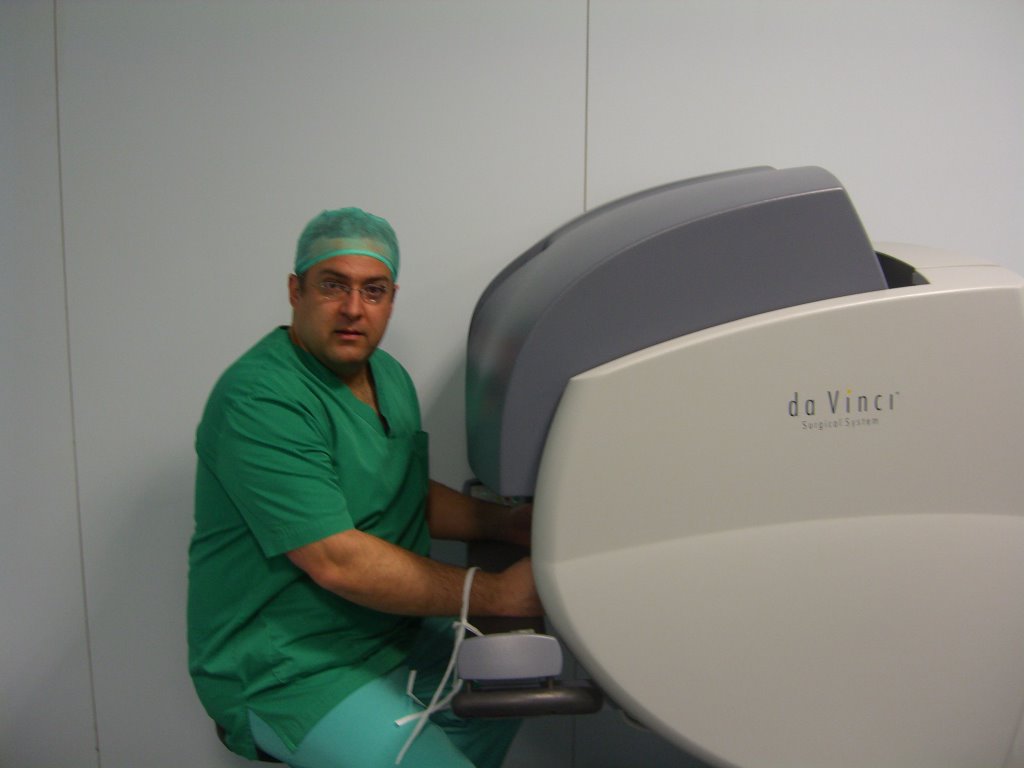 Today I took a plane with my colleague, Dr. Castillón to participate in a training session on Robotic Radical Prostatectomy with the Da Vinci system. This system allows the surgeon to operate from a surgical station, as in the photograph, and provides 3D visualization of the operative field inside the abdomen. This is the state of the art treatment for localised prostate cancer and it allows to obtain spectacular oncological results, as well as high rates of urinary continence and sexual potency preservation after this operation, that are not obtainable with open surgery.
We are trying to achieve to adopt this technology at the Instituto de Cirugía Urológica Avanzada, in collaboration with Hospital USP San José from Madrid. The problem is the high cost of this equipment, so if there is any benefactor reading this and wanting to help us, we will be happy to hear from him. We want to be able to offer this treatment for prostate cancer patients in Madrid. We are starting our training in order to be able to operate our patients soon.
This robot is intuitive and allows the surgeon to conduct surgical operations with safety and precision from the very beginning.
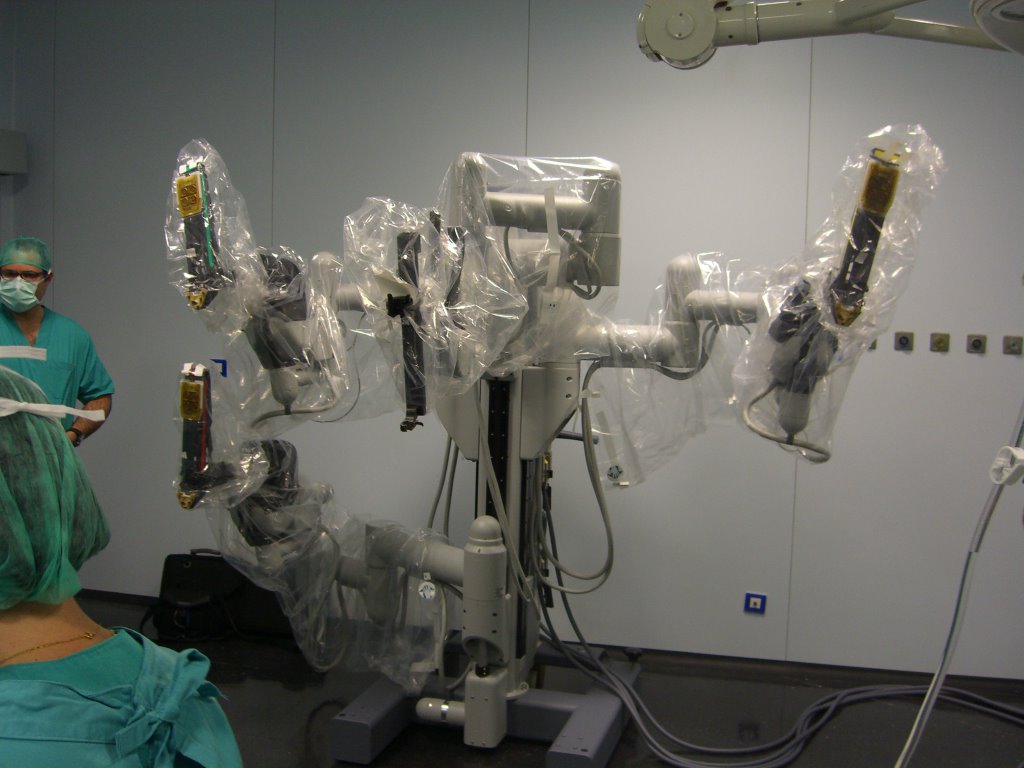 This is the robot and the four arms, it will be position by the patient and the robot will manipulate the surgical instruments. It is a slave robot, it obeys the movements of the surgeon hands, that holds two very sophisticated Joysticks with his hands. The robot even corrects tremor of the surgeon's hands. 3D vision inside the abdomen helps visualizing tissues with unseen quality of image and enhancement.
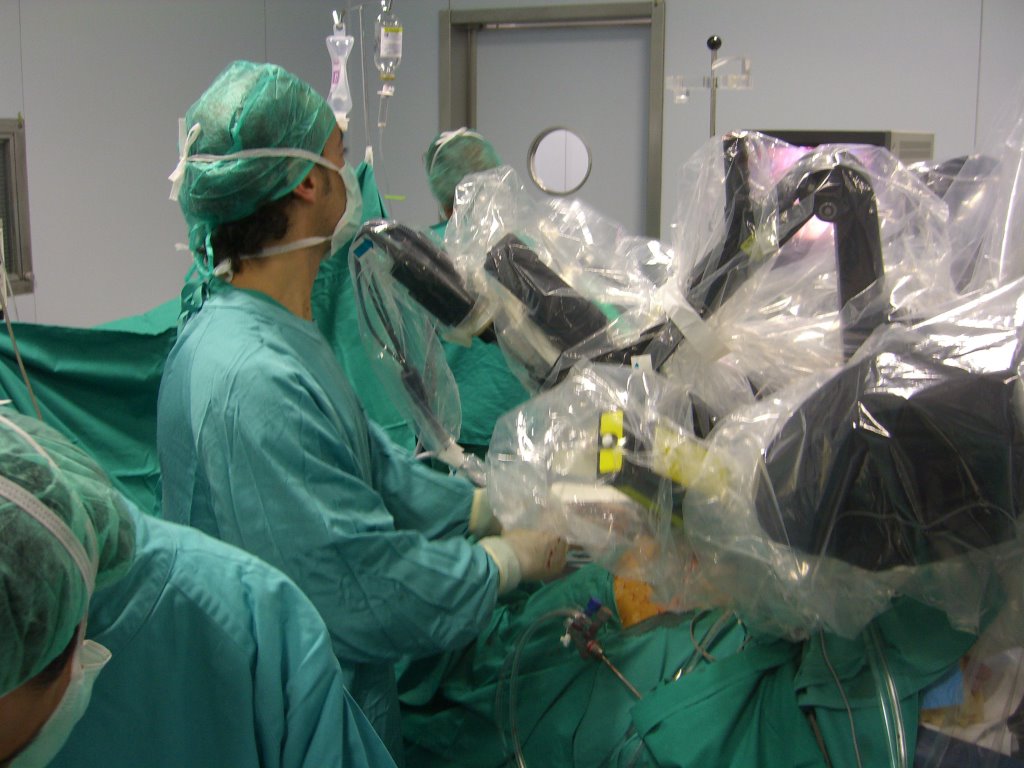 The surgeon is relaxed, sitting in the surgical console, and an assistant changes the instruments of the robot when the surgeon requests it. It is no doubt the way surgery will follow in the future.
It is a fact, medicine is becoming more and more technologic, and technology is expensive. The best doctors in the future will not necessarily be those who study more, or those with more natural ability and dexterity for surgery, but those who have access to the latest technology, that will be very costly, but that will offer unparalelled results in the treatment of urologic diseases.
Monday, February 13, 2006
New training session in La Coruña
 Once again I flew to La Coruña to participate in a training session. In this ocassion we had a difficult case, a patient with a 135 gram prostate. After spending the afternoon there, I took the plane back to Madrid. This is a busy week, this Thursday I will do an early morning PVP and then I will take the plane to Bilbao, in the north of Spain. I am going to witness a case of radical
prostatectomy for prostate cancer with the "Da Vinci" surgical robot. Then I will travel to Valencia Friday and Saturday, where I will conduct a training session where we will operate four patients. In order to make this posting more interesting, I will explain what kind of instruments we use for Greenlight PVP.
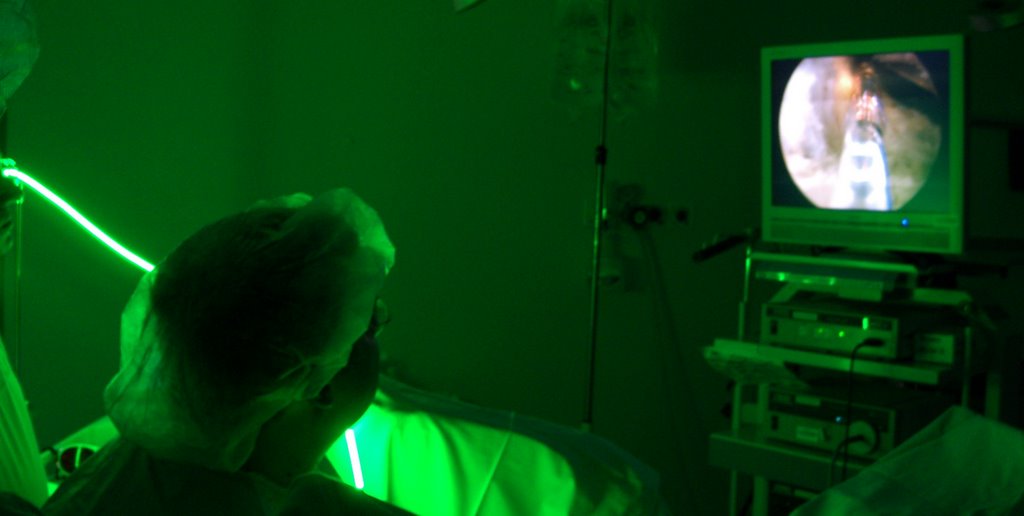
This is a photograph of the cystoscope we use for PVP, it is thinner than the classic resectoscope used in TURP (Transurethral resection of the prostate). The laser fiber is introduced throuhg the cystoscope's working channel, and is provided with a plastic knob that allows to rotate it, introduce it or withdraw it easily to ensure prostate vaporization.
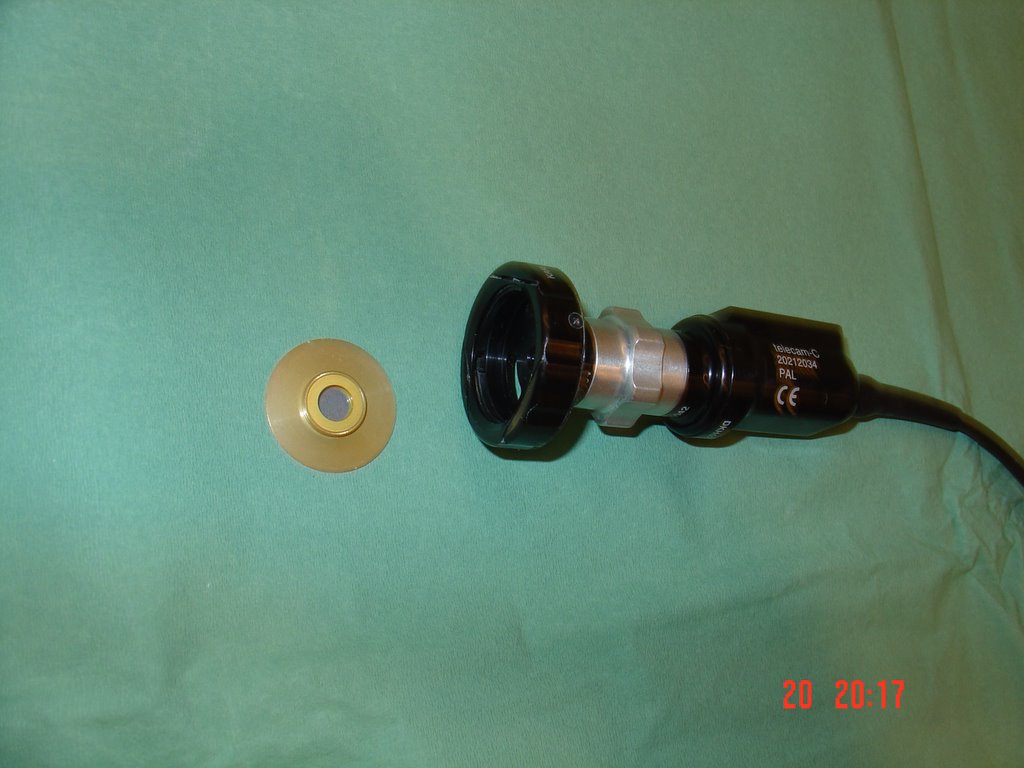 The black piece is the telescope's visor, traditionally one would look through it with the naked eye, but when working with lasers eye protection is a must, that is why we connect this visor to a surgical endoscopic video camera, but in order to protect the camera from the intensity of the greenlight laser (the reflection of the laser light could break the camera), we use a filter between the visor and the camera. This explains why in the photographs of the technique I publish here, the laser fibre appears green, but in the endoscopic videos the laser light looks like orange. This filter blocks the specific wavelenght of the greenlight laser (532 nm).
Thursday, February 09, 2006
Invitation to South Africa.
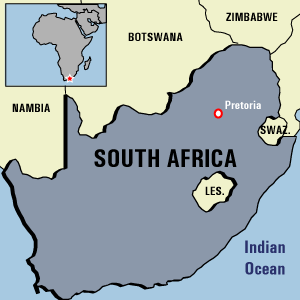 Yesterday I received confirmation of an invitation to travel to South Africa to participate in lectures in different cities on Greenlight PVP (Photoselective Vaporization of the Prostate).
I was told that there are still no Greenlight units installed in South Africa, but there is a great interest in the technique.
After the workshop at King's Hospital in London I will depart to South Africa to participate in lectures in different cities in South Africa. I will return the 1st of April to Madrid.
I will update this entry as soon as I receive additional information.
Invitation to King's College Hospital, London
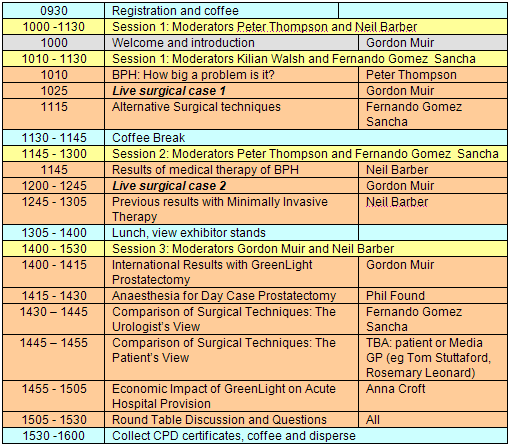
At last we have a definitive date for the meeting at Kings College Hospital in London. March 24th. Mr Gordon Muir is organizing a fantastic workshop devoted to PVP (Photoselective Vaporization of the Prosate). Lectures, round tables and live surgeries will take place in front of Urologists, GPs, anaesthetists and other people interested in this technique. I will contribute with a couple of presentations. I guess if someone wants to attend he will have to contact Mr. Gordon Muir at King's College Hospital, London.

New trip to India
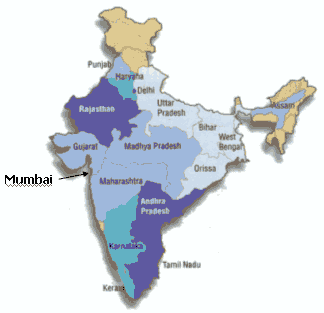
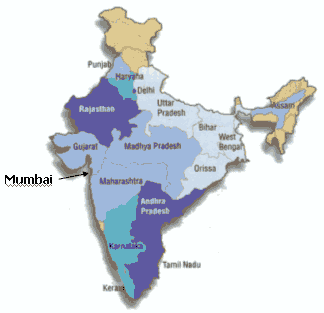
Again I have been invited to travel to India. This time I will visit Hospital Prince Ali Khan in Mumbai. The first weekend of March I will spend some time there with the urologists to contribute to their training on PVP (Photoselective Vaporization of the Prostate).
Live surgery at the International Congress in Zaragoza
 Today I have participated in the Urology International Congress celebrated at the Hospital Miguel Servet, from Zaragoza, organised by profs. Rioja, Liédana y Roncales. It is a very impressive congress, the organization was superb and the scientific program very attractive. Multiple national and international experts were invited. The conference hall had three giant screens where urologists attending the congress could see three simultaneous surgical interventions and hear one of the three conversations going on between the surgeons and the moderators of each surgical session. Congratulations to the organisers!!!.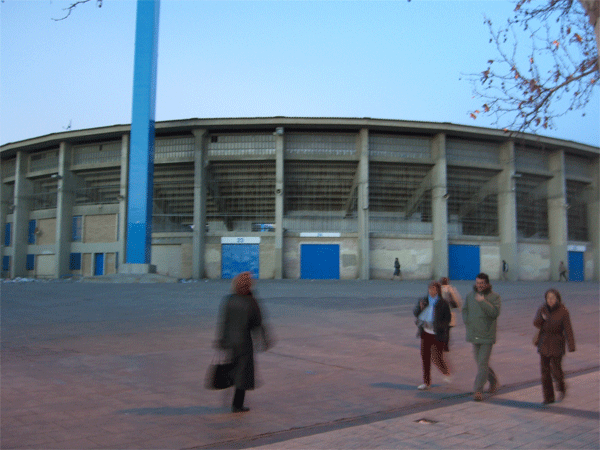
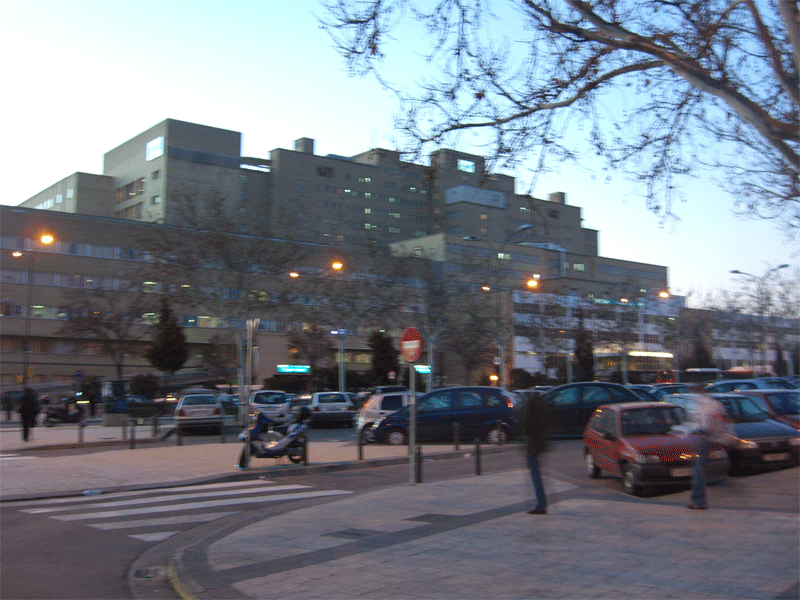 This Hospital Miguel Servet is interestingly in front of the football stadium "La Rosaleda", where the local team scored 6 goals to Real Madrid football club, who could one produce one miserable goal. I have had the strange feeling that everybody here looked suspiciously happy and their smiles were probably wider than usual. I am not exactly a football fan, but one perceives these things..... and my team is Real Madrid.
My contribution to this scientific meeting was to perform a live PVP (Photoselective Vaporization of the Prostate). The patient was relatively young, and suffered Benign Prostatic Hyperplasia, and although the prostate was small, weighing 44 g, it caused him bothersome symptoms. After visiting him in the Hospital room and chatting for some time explaining the operation and what to expect in the postoperative period, I went down to the surgical theatre. They were operating another BPH patient with a monopolar electrosurgical unit. Monopolar resection is a sophistication of the instrument used for the classic transurethral resection of the prostate (TURP) it allows better cutting and apparently a shorter catheterisation time for patients. It uses saline as irrigant, and this avoids the TURP syndrom (absoption of irrigant into the bloodstream, and dylutional hyponatremia) that can happen when a solution with glycine is used as irrigant. But coagulation is less than perfect, and the patient bleeds during surgery. When they finished, a catheter was inserted and a traction was devised to diminish postoperative blood loss, they said the catheter would stay in for a couple of days.
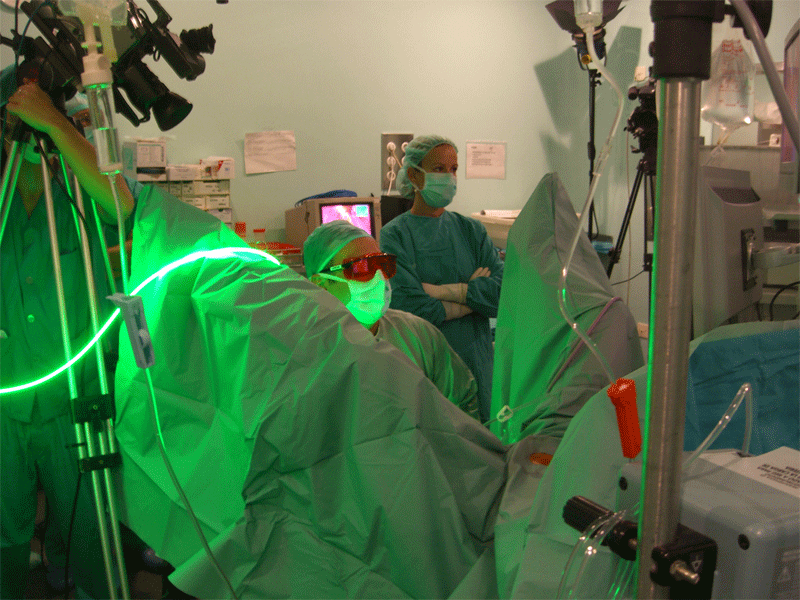 Then it was my turn. The PVP operation was uneventful and I was able to vaporise BPH tissue and reach the capsule of the prostate in just 45 minutes. During the operation, I had a microphone that allowed me to explain the operation and I also had an interesting conversation with the moderator, Dr. Miñana, who posed very interesting questions. I tried to summarize the advantages of this technique as well as the mechanisms of laser and tissue interactions. The audience was very impressed, specially after having seen a monopolar resection, which did not avoid bleeding.
The patient did not bleed at all, and he told me he was happy when he was being carried to the ward, as he had heard all my explanations during surgery. I asked the urologists who will do the follow up to pull his catheter out six hours after surgery and told them that he could be sent home later that day if they wanted. Each time I do this operation I get more convinced that PVP is superior to any kind of prostatic resection, be it with a bipolar or a monopolar generator.
After the succesful surgical session, I went to a local restaurant and then took the AVE (the high speed train) towards Madrid hoping to get some rest tonight.
Wednesday, February 08, 2006
New training session in TEKNON, Barcelona
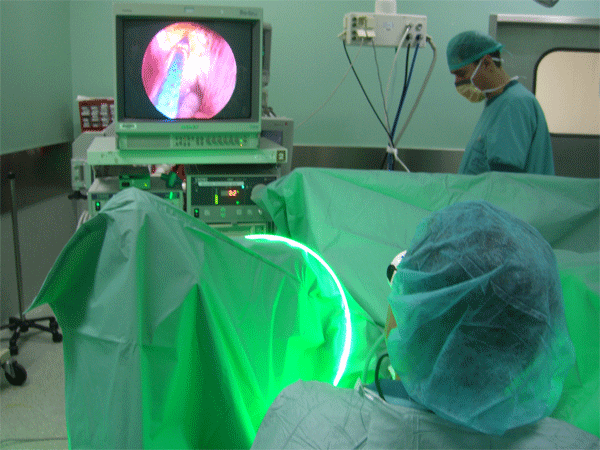 Today I travelled to Barcelona to participate in a training session on PVP (Photoselective Vaporization of the Prostate) for BPH (Benign Prostatic Hyperplasia). We did two cases, one was a very high risk patient, who was obese, and had an aortic aneurism, dilated myocardiopathy and other serious conditions. His prostate was relatively big, with 90 grams. The operation was uneventful and today we managed to finally operate him, as this time he did not take biscuits just before scheduled surgery (some days ago we had to cancel the operation for this reason). In spite of the high surgical risk, we managed to operate him and to let him catheter-free. He had been catheterised due to an acute retention of urine and after that, he was unable to void spontaneously. Then we did an easier case, a 60 g prostate, that was also uneventful. I then took a car and drove towards Zaragoza, a three hour trip to reach this city. Tomorrow I have to participate in the International Congress performing a live PVP in front of 200 + urologists from Spain and other countries.
Sunday, February 05, 2006
Training session in Madrid
I operated three PVP patients this morning, all sufferers of Benign Prostatic Hyperplasia, and we had two visitors that came to the surgical theatre to see the operations. One was Dr. Camille Mugnier, from Bordeaux, France. He is Dr. Gastón's partner and he specialises in BPH. He was interested in PVP and after this session he was convinced to buy a Greenlight laser. The second visiting urologist was Dr. Virgilio Baz, from Lisbon, Portugal. He has already bougth it, and he wanted to see some procedures before starting offering this treatment to his patients.
We started with a 60 gram prostate, then a 30 gram prostate and finally, a relatively big 100 g prostate. Many urologists are skeptic about the fact that big prostates can be operated succesfully with PVP. ¿Is it possible to apply PVP to big prostates?
The answer is yes, but it is not an easy operation. The surgeon must be very experienced, he must have an "agressive" mentality, and try to vaporize as much tissue as possible, and he must be ready to spend as much time as necessary and as many fibres as needed. In this case, a 100 gram prostate, I used 430.000 joules with three fibres (they are more effective in their first 150.000 joules) in two hours. I operated this patient under spinal anaesthetic starting at 4.00 pm and he was discharged the following morning.
This is the ultrasound scan I took 30 hours after the operation. A central cavity is seen, similar to those seen after open prostatectomy.
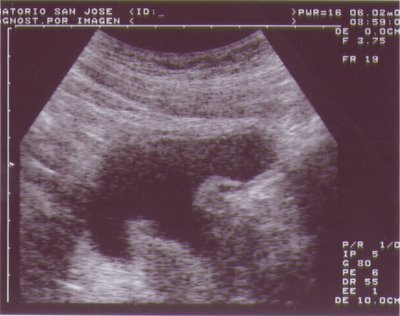
I would appreciate comments from visitors to this blog.
We started with a 60 gram prostate, then a 30 gram prostate and finally, a relatively big 100 g prostate. Many urologists are skeptic about the fact that big prostates can be operated succesfully with PVP. ¿Is it possible to apply PVP to big prostates?
The answer is yes, but it is not an easy operation. The surgeon must be very experienced, he must have an "agressive" mentality, and try to vaporize as much tissue as possible, and he must be ready to spend as much time as necessary and as many fibres as needed. In this case, a 100 gram prostate, I used 430.000 joules with three fibres (they are more effective in their first 150.000 joules) in two hours. I operated this patient under spinal anaesthetic starting at 4.00 pm and he was discharged the following morning.
This is the ultrasound scan I took 30 hours after the operation. A central cavity is seen, similar to those seen after open prostatectomy.
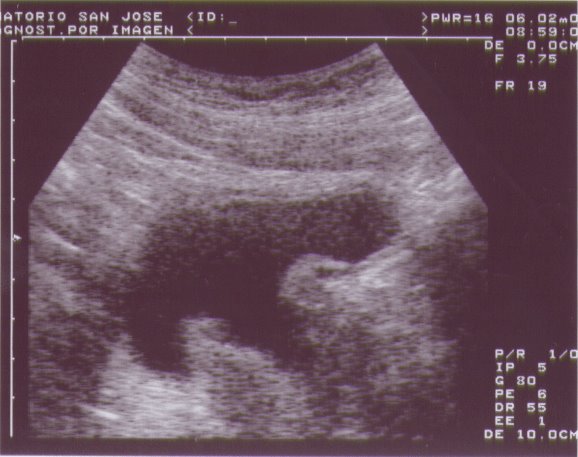
I would appreciate comments from visitors to this blog.
Friday, February 03, 2006
Videos in this blog
I have just found out a way to include videos in this blog. This gives me the chance to show videos that can be useful for patients as well as to share my experience and tips and tricks with other doctors interested in PVP - Photoselective vaporization of the prostate. This video shows a PVP performed on a patient with Benign Prostatic Hyperplasia (BPH) with very bothersome symptoms and a 44 gram prostate. The procedure took about an hour, I kept a catheter in for six hours and I took it out leaving 250 cc of saline inside the bladder. The patient voided wonderfully and was discharged the same day, eight ours after finishing the operation.... check it out.
Wednesday, January 25, 2006
New (half-)training session in Barcelona
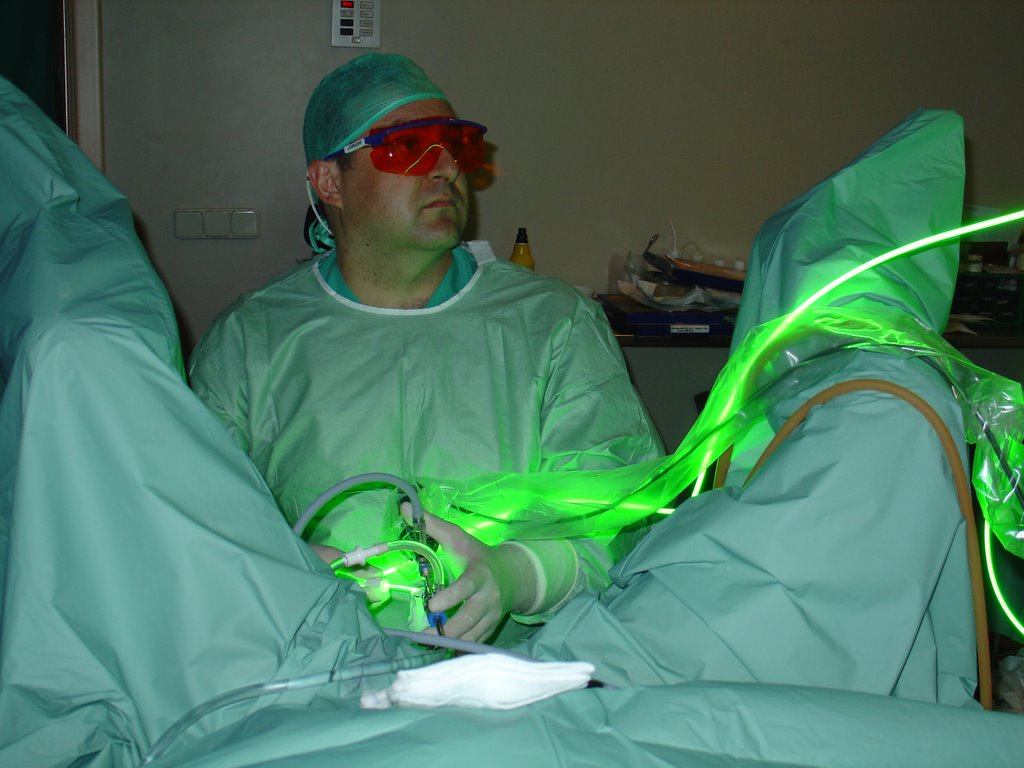 Today I took a flight to Barcelona to participate in a training session on PVP - Photoselective vaporization of the prostate. We had programmed two patients, the first case was straightforward, the second was very complex. The second patient in the list had morbid obesity and respiratory problems, and we planned to operate him in the sitting position, to increase the chances for him to tolerate the operation. His prostate was relatively big, weighing 100 g. The first case was uneventful, the second case was cancelled because the patient did not respect the "nil per mouth" instruction and he had had breakfast consisting in coffee and cookies. The anaesthesiologist thought we could not operate him with a full stomach, so we have rescheduled him for another date and I went back to Madrid.
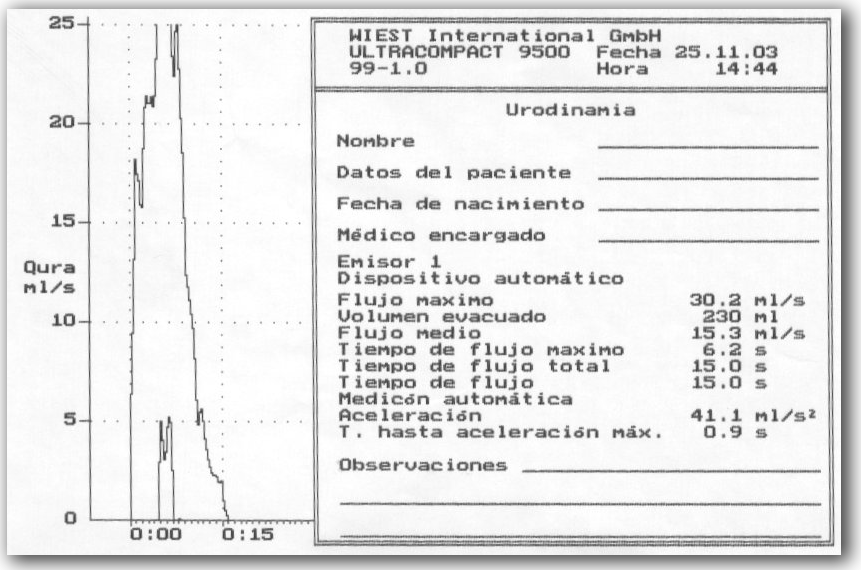
As this blog entry is not very exciting, I will use the oportunity to show the kind of effect PVP has on flow rates. Below I show how a flow rate measurement looks like, this test measures urinary flow (volume of urine passed in mL per unit of time in seconds) and represents it on a graph. For the patient, a flowmetry consists in passing water into a funnel connected to the registry equipment, so it is a painless test. It gives very useful information.
Here I show the preop and postop flowmetry of a patient. Initially the flow was very low and bladder emptying was incomplete. After PVP, the flow improved more than threefold. The patient was able to empty his bladder completely and very quickly after the operation.

Saturday, January 14, 2006
New training session in Valencia
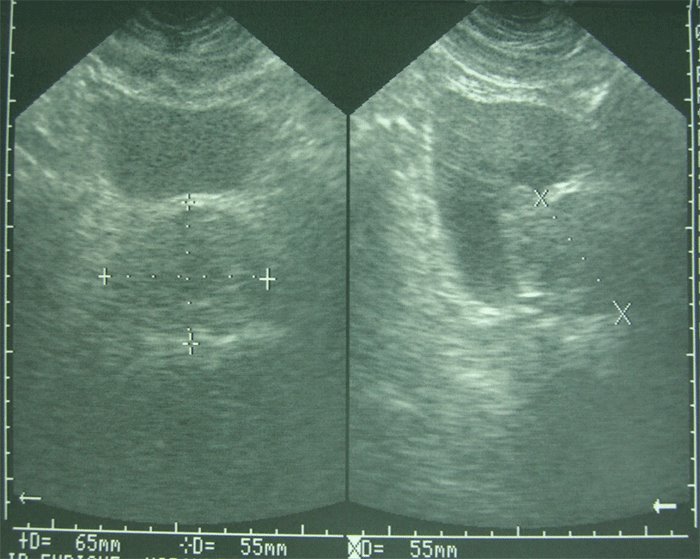 Today, a saturday, I took an early plane to Valencia in order to participate in a training session on KTP laser for the treatment of Benign Prostatic Hyperplasia. I operated a high risk patient with a 100 gram prostate. The operation was uneventful and I hope the patient will go home later today.
This patient had a very big median lobe, that can easily be seen in this ultrasound image. The way I treat median lobes is to reduce them uniformly until I reach the bladder neck, and then I perform an incission in the midline until I see the bladder neck fibres. Later on, the bladder neck is widened laterally. This strategy avoids damaging the ureteral orifices. It is a simple and quick way of treating the median lobe and achieving a fantastic result without risk of complications. This christmas I could not sleep one night and I started drawing these in order to explain this technique to other doctors interested in KTP laser prostate surgery (PVP- Photoselective Vaporization of the Prostate).

Interestingly, one of the surgeons attending the surgical session in theatre has asked me to fly to Valencia again in March in order to operate him, he is very bothered by his symptoms and he has decided to undergo PVP. It will be my pleasure to treat a colleague.
Laser Surgery for Urinary Stones
 Today we have used for the first time our new Holmium laser, Stonelight, manufactured by Laserscope.
We invited Dr. Gaspar Ibarluzea in this ocassion as invited surgeon. He is a fantastic endourologist from Bilbao. Dr. Luis Llanes, the director of the stone unit from the Institute of Advanced Urological Surgery and I helped him to treat two patients with very complex urinary stones.
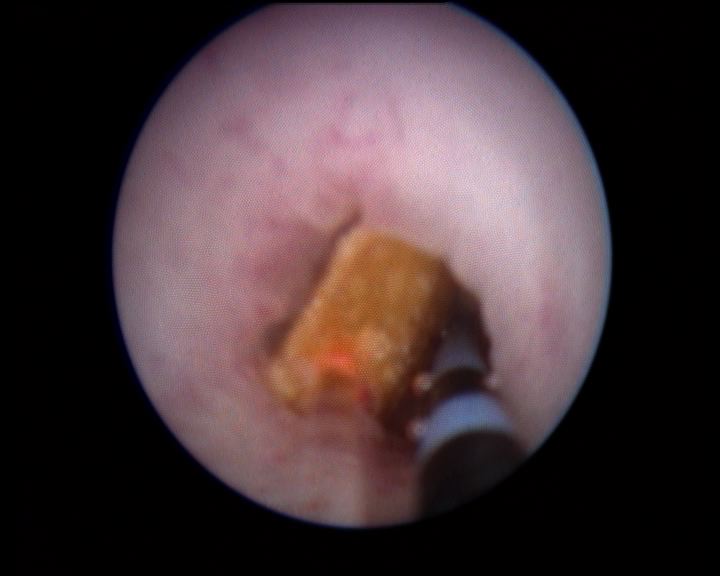
Endourology has advanced significantly with the use of Holmium laser. It fragments stones easily respecting the tissues from the urinary tract and allows us to treat urinary stones endoscopically, in a minimally invasive way. Patients recover very soon and go back to their normal life in a few hours in the simpler cases or in a few days in the more complex ones. Today, endourology is taking over extracorporal shock wave lithotripsy because is more efficacious and quicker for the patient.
We operated two patients, and we had the chance to check the efficacy of this Stonelight laser in kidney and ureteral stones. We first performed a percutaneous surgery on a very big uric acid stone that filled the whole left renal pelvis and the upper part of the kidney, and then we performed a left flexible ureteroscopy and intracorporeal holmium laser lithotripsy followed by a right percutaneous surgery in the same patient.
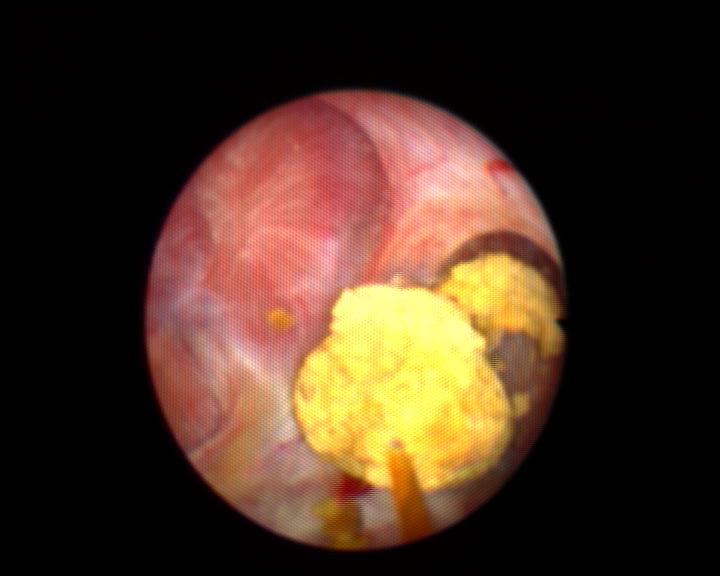

A fantastic day, we learned a lot. My colleague from the ICUA, Dr. Luis Llanes, has plenty of experience with these endourological techniques and from now on we will be able to offer the newest endourological treatment options with Holmium laser to our patients.
Monday, January 09, 2006
Laparoscopic Radical Prostatectomy with Dr. Gastón
This saturday we had the privilege of inviting Dr. Gastón to operate with us a patient with a localised prostate cancer. Dr. Gastón is well known for having developed the technique of laparoscopic radical prostatectomy for prostate cancer and is considered the world leader in this technique. He has operated more than 3000 patients. As an example of his immense experience, he performs two or three laparoscopic radical prostatectomies per day in his hospital in Bordeaux, France.
After picking him up at the airport in Madrid, Dr. Gastón, Dr. Ignacio Castillón and I went to our Hospital USP San José, where we performed the operation that was uneventful. We were deeply impressed by the perfect technique and the anatomic knowledge of Dr. Gastón, who needed two hours to complete the operation with a minimal blood loss (less than 30 cc of blood). The patient was discharged on monday morning.
Dr. Gastón mentioned that this technique allows obtaining a high quality urinary continence postoperatively and that the chances of preserving sexual function is very high, specially in younger patients.
 Our institution, the Institute of Advanced Urological Surgery, has reached an agreement with Dr. Gastón to bring him over to Madrid to operate our patients so they can have access to a world leader in prostate cancer surgery without having to leave their country.
After picking him up at the airport in Madrid, Dr. Gastón, Dr. Ignacio Castillón and I went to our Hospital USP San José, where we performed the operation that was uneventful. We were deeply impressed by the perfect technique and the anatomic knowledge of Dr. Gastón, who needed two hours to complete the operation with a minimal blood loss (less than 30 cc of blood). The patient was discharged on monday morning.
Dr. Gastón mentioned that this technique allows obtaining a high quality urinary continence postoperatively and that the chances of preserving sexual function is very high, specially in younger patients.
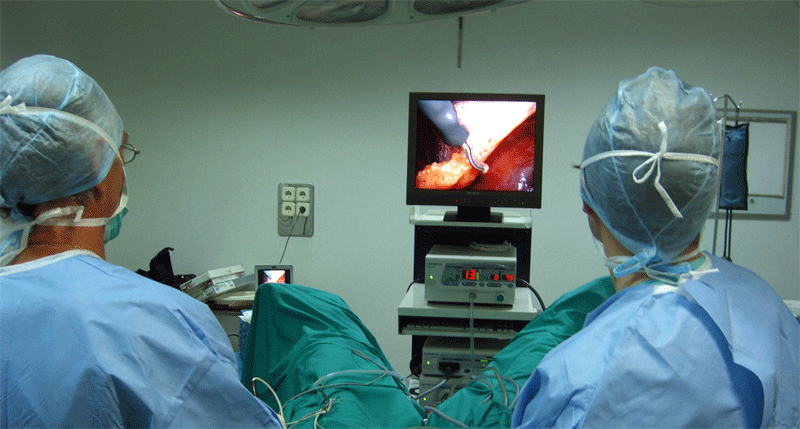 Our institution, the Institute of Advanced Urological Surgery, has reached an agreement with Dr. Gastón to bring him over to Madrid to operate our patients so they can have access to a world leader in prostate cancer surgery without having to leave their country.
Thursday, December 22, 2005
Audiovisual Course on New Technologies in Urology
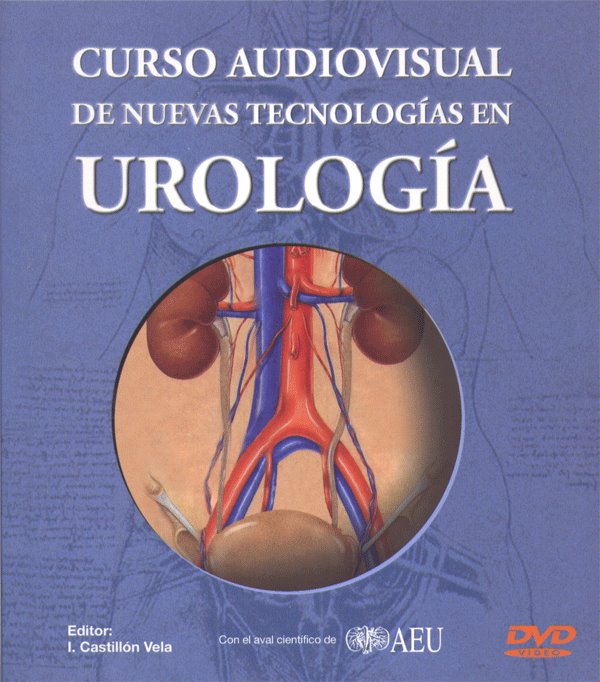
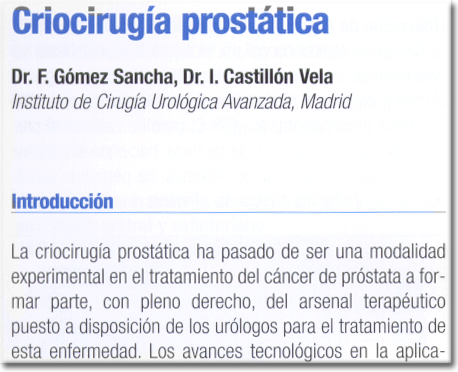 Today I have received a copy of the fourth volume of the Audiovisual Course on New Technologies in Urology. A training programme sponsored by Pfizer and supported by the Spanish Urological Association. I already contributed for volume I with a video and a chapter on PVP - Photoselective Vaporization of the Prostate. In this volume IV I have published an article and a video on Cryosurgical ablation of prostate cancer. This is an interesting video, it includes images of the 4D transrectal ultrasound monitorization of the procedure, a new approach we performed at the Instituto de Cirugía Urológica Avanzada (ICUA), in Madrid.
This training course will be provided for free to all Spanish urologists. The editor is one of my colleagues at the ICUA, Dr. Ignacio Castillón. He was trained as a laparoscopist in L.A., USA. 90% of the content in this audiovisual course is related to laparoscopy.
Monday, December 19, 2005
New training session in La Coruña
 This Monday, December 19th, I went to La Coruña again to participate in a Photoselective vaporization of the prostate (PVP) surgical training session. We did two operations, the morning session on a patient with a 70 gram prostate and the afternoon session on a patient with a 90 gram prostate. The day was uneventful, we had time to go a wonderful restaurant for lunch, with a view of La Coruña. Octopus is the local specialty and it is delicious. I then came back to Madrid, the following day I had to operate a friend who is a Doctor and his prostate volume was 105 cc. The operation was also uneventful and I was able to discharge him in the afternoon, after two and a half hours of PVP. The more PVPs I do, the more I like PVP, recovery is so spectacular, patients go back to their normal lifes, and results are so good!!!
Tuesday, December 13, 2005
New training session in Barcelona
 Today I went to Barcelona, to participate in another surgical teaching session at TEKNON hospital, in Barcelona. We did two PVP cases, both prostates were relatively small, so the surgeries did not take much, and everything developed smoothly. One of the patients had been operated in the past, fifteen years ago, with a TUIP (Transurethral incision of the prostate), performed with a classic resectoscope. His prostate was highly irregular, but this did not pose any problem. We did not see a drop of blod in all day, both cases were highly satisfactory.
Monday, December 12, 2005
New training session in La Coruña
 Today I took a plane to La Coruña, to participate in another teaching session. The case we operated today was relatively difficult. The prostatic size was not too big, but it was richly vascularised and had a tendency to bleed. As the instrument we introduce through the urethra for Photoselective Vaporization of the Prostate is rather thin, and the irrigation of water in-and- out the bladder it provides is rather slow, any amount of blood, no matter how small, obscures vision and makes the procedure more difficult. We had to use all the surgical tricks and strategies to be able to finish the procedure successfully. A teaching session with a high learning value. The image shows the Veru Montanum, the anatomic structure where ejaculatory ducts drain into the urethra. This is an important surgical landmark, because it tells the surgeon the exact localization of the external urinary sphincter, that must be respected. A little bit upwards, both lateral lobes can be seen in part, they obstruct urinary flow in the same way as tonsils obstruct the pharynx in children...
Saturday, December 10, 2005
Meeting of Spanish Greenlight users at USP Hospital San José
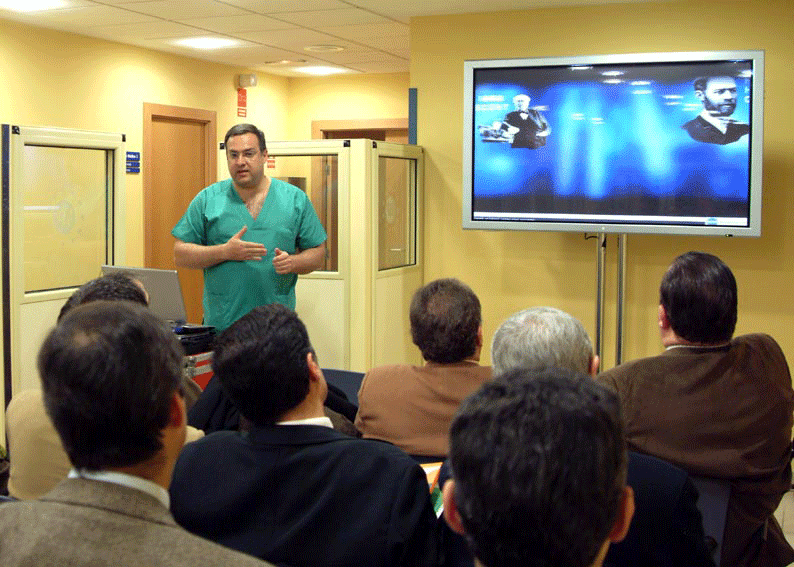 This saturday we celebrated the second meeting of the Spanish users of the Greenlight Laser at thel Hospital USP San José de Madrid, the institution where I work. The meeting was kindly sponsored by Davanzia, the medical company that distributes this KTP laser and other medical products in Spain. The meeting was organized with the help of USP and the Instituto de Cirugía Urológica Avanzada. We welcomed doctors working in 20 out of the 25 (soon 30) units offering this technique throughout the country. Two live surgeries were performed, one in a 100 gram prostate, by Drs. Torrecillas, Macías and myself, to show the different strategies and techniques used. This was transmitted via a videolink to the audience. In the afternoon, I performed a PVP on a patient with a 166 gram prostate. It was interesting to share the initial experience of the groups offering this relatively new technique in the country. It allowed us to share experiences and technical aspects of great interest, specially for those groups with less experience. All presentations were of high quality and I believe all participants went back home with better knowledge on the technique and convinced about the fact that PVP will gradually substitute TURP for its high efficacy and low morbidity.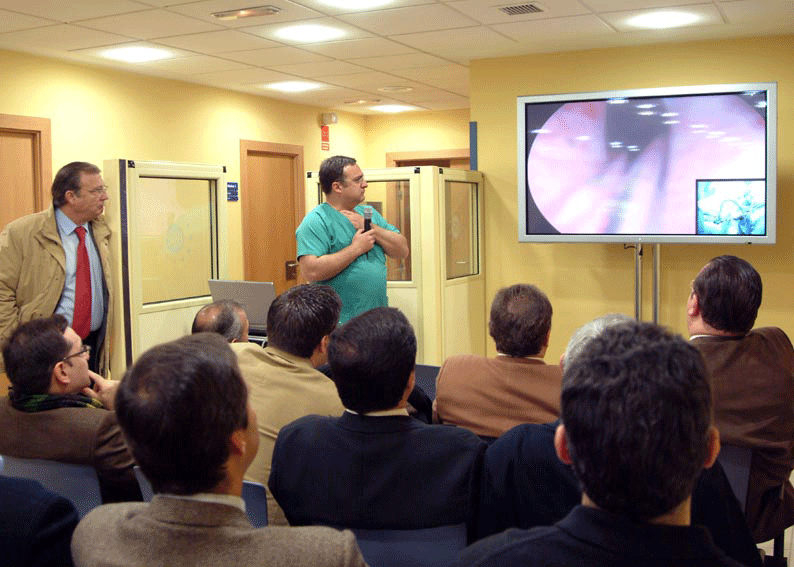
Friday, December 02, 2005
Invitation to operate in Chile 4
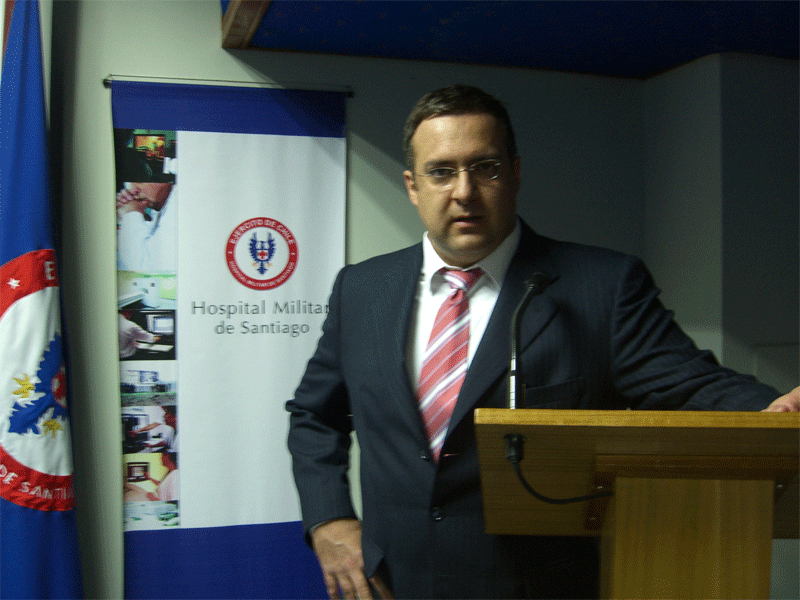
Today we returned to the theatres of the Military Hospital in Santiago de Chile to carry out the last surgical training session. It has been a privilege to get to know this urology department where all urologists are great specialists and also fantastic human beings. We have again operated three patients and I will return to spain with the nice feeling that the urologists of this department have taken advantage of the training and are now able to carry out a PVP (Photoselective Vaporization of the Prostate) correctly and in a safe and efficacious way. Two o fthe patients we operated yesterday voided without problems, the last one had some difficulty and we decided to keep a small urinary catheter for a couple of days. The surgical result was very good, so he will do well for sure. All patients had clear urine and felt very well.
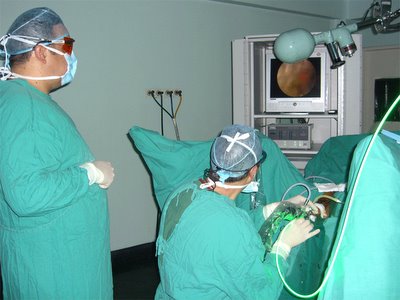 Coming to Chile has been a very enriching experience and it has been a privilege to be able to share some time with the urologists from the Military Hospital. The head of the department of urology, Dr. Fernando Coz is a fantastic urologist and a wonderful person. This morning he was able to operate one of the patients with technical perfection. After the satisfaction of having contributed to this department and their future patients, I will take some time to rest visiting the south of Chile with my wife.
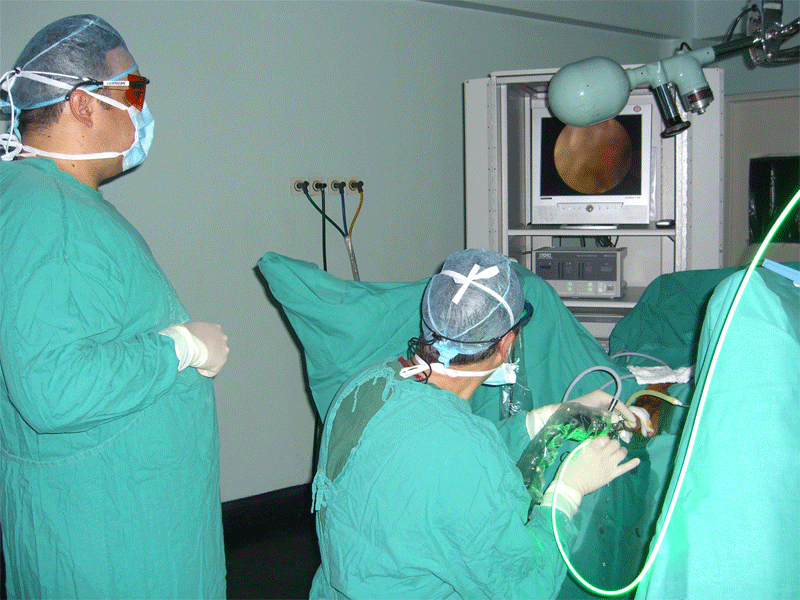 Coming to Chile has been a very enriching experience and it has been a privilege to be able to share some time with the urologists from the Military Hospital. The head of the department of urology, Dr. Fernando Coz is a fantastic urologist and a wonderful person. This morning he was able to operate one of the patients with technical perfection. After the satisfaction of having contributed to this department and their future patients, I will take some time to rest visiting the south of Chile with my wife.
Thursday, December 01, 2005
Invitation to operate in Chile 3
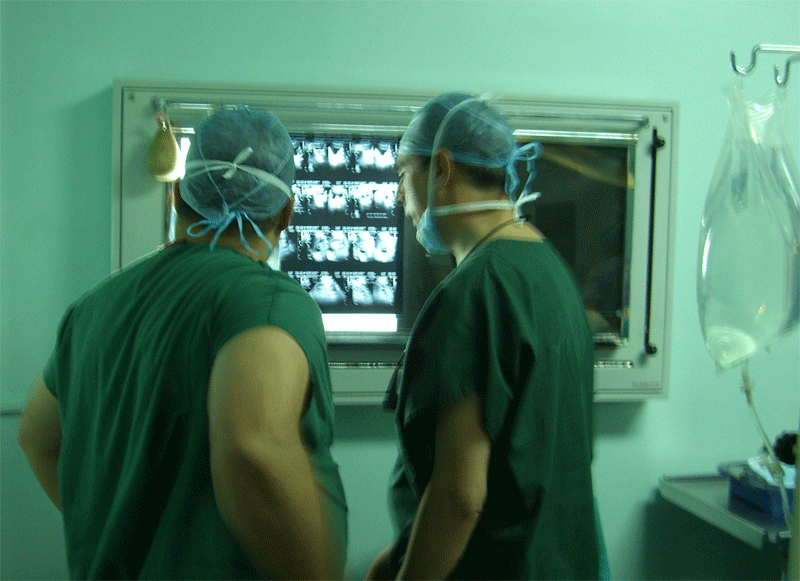 Today we performed three new cases of PVP (Photoselective vaporization of the prostate) at the Military Hospital at Santiago de Chile. We did two simple cases with prostatic weights of 40 and 50 grams and a more difficult one, with 79 grams, that was very successful and I was able to complete it in one hour and fifteen minutes. We visited the patients operted the previous morning, and were catheter-free and voided wonderfully, their flow rate was 12, 14 and 18 mL/s, and it will improve further day by day. The personnel working at the military hospital was very surprised to witness the results of this technique.
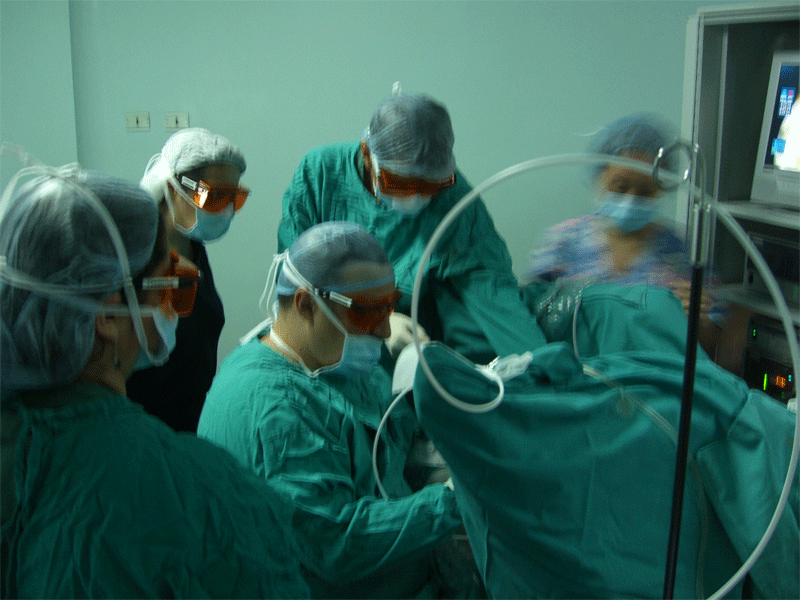 The Military Hospital in Santiago is very nice and it looks as a wonderful hospital, but they are building a new one and they will move there next year. The theatre's personell is really nice and efficient. The urologists working here have enjoyed this experience because they thought this technique was something different. They thought PVP was a slow and less spectacular than it really is. I have taught them all the tricks I know to perform it safely and efficaciously.
During the afternoon, I dictated the conference "PVP (Photoselective vaporization of the prostate, a new horizon in the treatment of BPH" in the auditorium at the Military Hospital. After my presentation we had a discussion that was very fruitful, with very good questions from the floor related to the technique.
Subscribe to:
Posts (Atom)