
Last updated: March 2026
If you have found this article, you are probably taking pills for your prostate. Perhaps tamsulosin, perhaps dutasteride, perhaps both. You were prescribed the medication, your symptoms improved a little at first, and since then you have been taking it every day for months or years without anyone asking when you will stop needing it — or whether a definitive alternative exists.
I will explain how these drugs work, what side effects they can cause, when there are clear signs that medication is no longer enough, and what happens when you decide to resolve the problem once and for all with surgery.
How BPH medications work
Alpha-blockers: tamsulosin, silodosin, alfuzosin
These are the first-line treatment and the most commonly prescribed drugs for prostatic symptoms. They work by relaxing the smooth muscle of the prostate and bladder neck, making it easier for urine to flow. They do not reduce the size of the prostate — they simply relax the "fist" that squeezes the urethra.
They act quickly (within days), which gives the impression that they "work" from the start. But their effect disappears as soon as you stop taking them. They cure nothing — they control symptoms for as long as you take them.
5-alpha-reductase inhibitors: dutasteride, finasteride
These drugs do reduce the size of the prostate by blocking the conversion of testosterone to dihydrotestosterone (DHT). The effect is slow — it takes 3 to 6 months to notice — and the volume reduction is modest (around 20–25%). They also halve the PSA, which must be accounted for in prostate cancer monitoring.
Combination therapy
The combination of an alpha-blocker with a 5-alpha-reductase inhibitor (the most common is tamsulosin + dutasteride, marketed as Combodart/Duodart) is more effective than either drug alone, particularly for large prostates. But it also combines the side effects of both.
The side effects nobody told you about
When you were prescribed the medication, you were probably told it was "well tolerated". And for many patients it is. But there are side effects that are mentioned in passing and that for some men are very significant.
Alpha-blockers
- Anejaculation: tamsulosin and especially silodosin can cause absent ejaculation in a significant proportion of patients. This is the same effect attributed to surgery, but caused by a pill; the mechanism is different, though. The pill inhibits the contraction of the prostate and seminal vesicles, and so it affects the quality of orgasm, which is reduced. After surgery, ejaculation takes place, but the semen stays in the bladder and does not come out, the orgasm is usually more normal.
- Dizziness and orthostatic hypotension: particularly when getting up in the morning or standing quickly. In older patients it can cause falls.
- Nasal congestion: bothersome but not serious.
- Intraoperative floppy iris syndrome (IFIS): if you need cataract surgery, tamsulosin can complicate the eye operation. It is important your ophthalmologist knows. This effect can persist for months after stopping the drug.
5-alpha-reductase inhibitors
- Erectile dysfunction: experienced by 5–8% of patients.
- Decreased libido: a similar proportion notice reduced sexual desire.
- Gynaecomastia: breast enlargement or tenderness.
- Post-finasteride syndrome: although controversial and debated, some patients report the persistence of sexual effects (erectile dysfunction, decreased libido, orgasm problems) after stopping the drug. The European Medicines Agency (EMA) acknowledges this possibility in the product information.
Signs that medication is no longer enough
Medication can be appropriate for a time, but BPH is progressive — the prostate continues to grow, and there comes a point when drugs can no longer compensate for the obstruction. The signs that this point has arrived:
- Symptoms have worsened despite medication: more nocturia, weaker stream, more urgency.
- PSA keeps rising: in a patient on dutasteride, PSA should be low. If it rises progressively, the prostate is still growing.
- Post-void residual has increased: if ultrasound shows significant urine remaining in the bladder after voiding, the bladder is losing the battle against obstruction.
- You have had an episode of urinary retention: if you were ever unable to urinate and needed a catheter, medication is no longer sufficient.
- Recurrent urinary infections: residual urine in the bladder is a breeding ground for bacteria.
- The side effects bother you more than the symptoms themselves: if the medication causes dizziness, erectile dysfunction, or absent ejaculation, you are paying a high price for a partial benefit.
What if I simply have surgery and stop all the pills?
This is the question many patients ask themselves but few doctors actively raise with them.
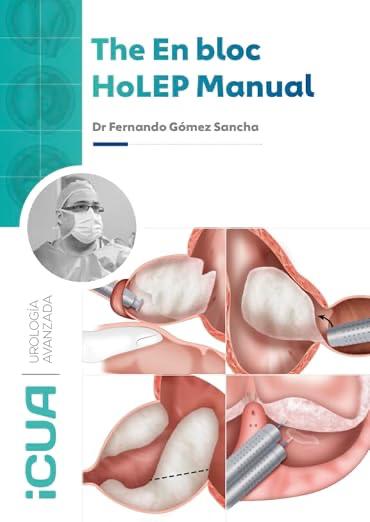
After HoLEP, the vast majority of patients stop all prostate medication: alpha-blockers, 5-alpha-reductase inhibitors, antimuscarinics. They do not need them because the problem is solved. There is no adenoma to obstruct, no need to relax a muscle that is no longer squeezing, no need to shrink tissue that is no longer there.
It is a paradigm shift: moving from managing a chronic condition with daily pills to solving the problem once.
The cumulative cost of chronic medication
This is rarely mentioned, but it is worth doing the sums. The tamsulosin + dutasteride combination costs roughly €30–40 per month in Spain. Over 10 years, that amounts to €3,600–4,800 — not counting follow-up visits, periodic PSA tests, and control ultrasounds. And after those 10 years, the prostate is still there, probably larger than when you started.
Definitive surgery has a higher upfront cost but resolves the problem once, eliminates the need for chronic medication, and has a retreatment rate below 2%. When you calculate the total long-term cost, the equation almost always favours surgery.
Does this mean medication is useless?
Not at all. Medication is useful and appropriate in many situations: when symptoms are mild to moderate, when the patient does not want or cannot have surgery at that moment, or as a bridge while surgery is being planned. What makes no sense is maintaining chronic medication with side effects indefinitely when a definitive, safe, and durable surgical solution exists.
If your urologist prescribed medication and your symptoms are controlled without significant side effects, there is no urgency. But if you have been medicated for years, symptoms are not improving, or side effects are affecting your quality of life, it is worth asking: "Does it make sense to carry on like this, or is there a way to resolve this for good?"
At ICUA we explain all the options honestly and personally.
📞 +34 91 435 28 44 · ✉ icua@icua.es
Scientific references
- Sandhu JS, Bixler BR, Dahm P, et al. Management of lower urinary tract symptoms attributed to BPH: AUA guideline amendment 2023. J Urol. 2024;211:11-19. DOI
- EAU Guidelines on Management of Non-neurogenic Male LUTS. 2025 Edition. EAU Guidelines
- Iscaife A, Rodríguez Socarrás M, Talizin TB, et al. Contemporary results of En Bloc HoLEP for large prostates. World J Urol. 2025;43:401. PubMed
- Gauhar V, Gómez Sancha F, Enikeev D, et al. Results from a global multicenter registry of 6193 patients (REAP). World J Urol. 2023;41:3033-3040. PubMed


No comments:
Post a Comment