

A new expert consensus paper has just been published in the World Journal of Urology (April 2026), bringing together practical recommendations from international high-volume surgeons — each with more than 1,000 endoscopic enucleation of the prostate (EEP) procedures — based on structured panel discussions held at the BEAM 2025 meeting (Belgian Endourological Association Meeting) in Ghent, Belgium.
I had the privilege of contributing to this collaborative effort alongside colleagues Martin Kanne, Cesare Marco Scoffone, Felipe Figueiredo, Thomas Herrmann, Peter Schatteman, Thomas Tailly, Carl Van Haute, and Pieter Uvin, coordinated by Gaëtan Devos.
Why does this paper matter?
Endoscopic enucleation of the prostate — whether performed with Holmium laser (HoLEP), Thulium laser (ThuLEP), or other energy sources — is now recognised as the gold standard for surgical treatment of benign prostatic obstruction (BPO), regardless of prostate size. Both the AUA and EAU guidelines endorse it. Yet its adoption worldwide remains limited, primarily because the learning curve is considerably steeper (30–50 cases) than that of traditional TURP (~10 cases).
This paper was born from a simple premise: if the most experienced EEP surgeons in the world could distil their collective know-how into practical, actionable guidance, we could help shorten that learning curve and make EEP safer and more accessible.
Key recommendations
1. EEP is not TURP — adopt the right mindset. EEP is an anatomical dissection along the prostatic surgical capsule, not a debulking technique. Unlike TURP, EEP cannot be interrupted once initiated — it must be completed. Surgeons must embrace anatomical variability and adapt to each case rather than imposing a uniform approach.
2. Train the entire ecosystem. Preparation goes well beyond the surgeon. The full operating room team — nurses, anaesthesiologists, sterilisation units, biomedical engineers — must understand the instruments, the laser, the morcellation device, and common troubleshooting scenarios. Institutional support from the department chair is essential.
3. Respect the learning curve. Start with prostates of 50–60 g with no previous treatments. Limit yourself to no more than two cases per surgical day during the initial phase. Avoid expert-level cases early on: post-radiotherapy prostates, glands >120 g, morbid obesity (BMI >35), or patients with penile implants. Communicate openly with the OR team that the first procedures will take longer.
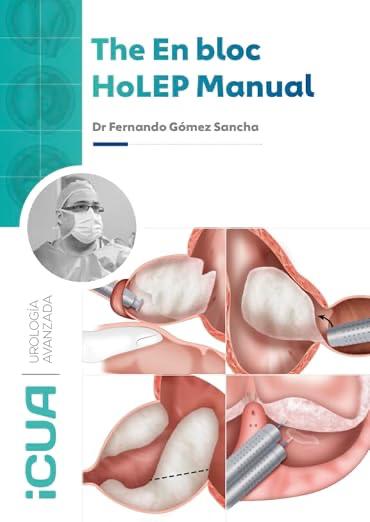
4. En-bloc technique with early apical release. Although there is no single standard enucleation technique, growing evidence supports the en-bloc approach as faster and more efficient than multi-lobe techniques. Importantly, regardless of whether a multi-lobe or en-bloc technique is used, performing an early apical release may reduce the risk of postoperative stress incontinence by minimising overstretching of the external urinary sphincter. This is a point we have consistently advocated from our experience at ICUA.
5. Choose the right dissection plane. One of the most frequent errors during apical enucleation is hesitating to initiate the dissection sufficiently distal to the verumontanum due to fear of sphincter injury. However, particularly in larger prostates, the optimal apical plane is often located well distal to the veru. A plane that is too proximal leads to false planes, bleeding, residual tissue, and frustration. Trust visual cues — fibrous bands, capsular glistening — over depth assumptions.
6. Invest in proper equipment. A high-power laser, an appropriate morcellator (oscillating devices demonstrate superior morcellation efficiency), continuous-flow resectoscope, heated irrigation fluid, adequate camera anti-fogging protection — these are not luxuries but essentials for delivering high-standard care and managing the learning curve.
7. Know when to stop or convert. When disoriented or facing poor vision, pull back the scope and reassess. The problem is almost always behind you. Converting to TURP is not a failure — it is a wise decision. Patient safety always takes priority over surgical ego.
8. Monitor your outcomes — always. Record your procedures. Use validated questionnaires such as the IPSS. Review your own videos even after 1,000+ cases. Discuss your results and complications with peers. Continuous self-assessment is what separates good from excellent.
Managing challenging anatomy
The paper provides detailed guidance on difficult scenarios: very large prostates (where instrument reach, intravesical protrusion and satellite nodules pose unique challenges), small prostates (<30 g, where the surgical capsule is poorly developed), and large median lobes (where the dissection plane near the bladder neck lies dangerously close to the ureteral orifices). Preoperative MRI assessment of anterior apical angulation and posterior base curvature is highlighted as a useful tool for estimating procedural difficulty.
Morcellation tips
Morcellation is often taught first because it seems simple, but serious complications — including bladder lacerations and even vesico-sigmoidal fistulas — can occur. The paper emphasises: meticulous hemostasis before morcellation, dual irrigation sources to prevent unexpected bladder emptying, eyes fixed on the screen at all times, and immediate pedal release if bladder injury is suspected.
Complication prevention
Key postoperative complications addressed include clot retention, transient stress incontinence, urethral stricture (most commonly bulbar), and bladder neck contracture. Prevention is paramount: adequate lubrication, adapting instrument size to urethral calibre (not vice versa), and performing en-bloc EEP with early apical release. The main risk factor for bladder neck sclerosis is a small prostate (<54–55 ml).
Full reference
Devos G, Kanne M, Gómez Sancha F, Scoffone CM, Figueiredo F, Herrmann T, Schatteman P, Tailly T, Van Haute C, Uvin P. Endoscopic enucleation of the prostate made practical: lessons from experts from the BEAM25 meeting. World J Urol. 2026;44:282.
doi:10.1007/s00345-026-06384-3
Dr. Fernando Gómez Sancha — Medical Director, ICUA (Instituto de Cirugía Urológica Avanzada), Clínica CEMTRO, Madrid. Pioneer of the en-bloc HoLEP technique with early apical release. Over 10,000 EEP procedures. International training programme for urologists from 60+ countries.


No comments:
Post a Comment