

Technology adds value when it is integrated around a clear anatomical concept. Without that concept, changing lasers is just changing labels. With it, any serious platform delivers comparable results — and understanding the underlying physics stops being an academic luxury and becomes a clinical tool.

The simultaneous live surgery format, with honest comparison between international and national schools, raises the level of every conversation in the room. There is nowhere to hide: decisions are visible, mistakes are visible, corrections are too. That is real training.

The institutional dimension is decisive. The joint presence of heads of service from Andalusia's public urology network at the closing session turns this course into a platform for transformation, not just technical dissemination. The AAU has done something unusual here: aligning training, evidence and healthcare management in the same room.

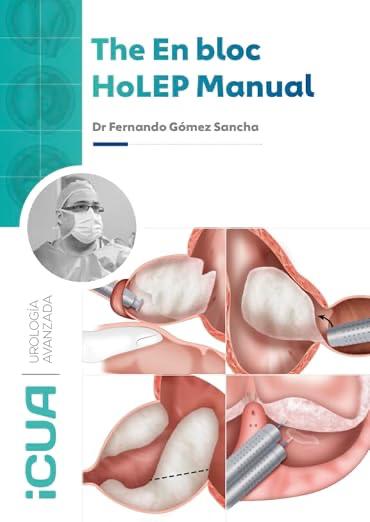
Thanks to Álvaro Juárez Soto and the team at Hospital Universitario de Jerez for the organisation, to the AAU for supporting this format, to the sponsors for participating as educational partners rather than protagonists, and, above all, to Belén Barba and Miguel Ugidos for proving that the course subtitle was not rhetorical. A special and deeply felt mention to all the invited speakers and surgeons, national and international: Cesare Marco Scoffone, Martin Kanne, Jean Baptiste Roche, Thiago Hota, Alfonso Gimeno, Javier Sánchez Macías, Moisés Rodríguez Socarrás, Julio Fernández del Álamo, Nelson Canales, Javier Amores and each of the moderators who covered the sessions with surgical judgement and without seeking the spotlight. You travelled, you operated in someone else's theatre, you taught openly and you discussed every technical decision without hiding anything. That generosity — which is far from trivial in this field — is what turns a well-programmed course into a memorable one. I know what it means to leave your hospital, your team and your routine to come and operate and teach without a safety net, and I am personally grateful for it.

And above all to the 75 registered urologists who filled the room for both days. You did not come to watch: you asked questions, you debated, you pushed with uncomfortable challenges during the breaks and each of you left with one concrete idea for Monday morning's clinic. Without an audience that engaged like yours, this format does not work; with one like yours, it becomes a real instrument of change.


We all go home with the same feeling: euphoric, energised, determined to keep pushing. The goal has not changed and it is very clear — that every patient in Spain, regardless of their hospital or their postcode, should have access to this remarkable technique. That is why we came, that is why we keep publishing, training and operating live, and that is why we will return to Jerez. And wherever else is needed. We keep going.

Four conclusions I take home, which justify the AAU consolidating this format as an annual event:
- Anatomical en bloc enucleation can be learned during residency. Belén Barba and Miguel Ugidos proved it live, operating as primary surgeons in front of an international faculty. This is not a theoretical argument.
- Expert tutoring on the ground — not on video, not in a wet lab — is the single factor that most compresses the learning curve. Javier Amores fulfilled that role with a level of discretion and effectiveness that deserves explicit recognition.
- Technology adds value when it is built around a clear anatomical concept. Without that concept, changing lasers is just changing labels. With it, any serious platform delivers comparable results.
- The simultaneous live surgery format, with honest comparison between schools, raises the level of debate. There is nowhere to hide: decisions are visible, mistakes are visible, corrections too. That is real training.


No comments:
Post a Comment