
Last updated: March 2026
If you find yourself getting up several times at night to urinate, if your stream is not what it used to be, if you have the feeling that your bladder never fully empties — you are not alone. These symptoms are extraordinarily common in men over 50, and in most cases they have a benign, treatable cause: benign prostatic hyperplasia.
In this article, I explain exactly what this condition is, how it is diagnosed, what treatment options are available in 2026, and when it is time to consider surgery.
What is benign prostatic hyperplasia?
The prostate is a walnut-sized gland that surrounds the urethra — the tube through which urine exits the bladder. From the age of 30, prostatic tissue begins to grow slowly but progressively. This growth is benign (it is not cancer) and is called benign prostatic hyperplasia, or BPH.
Over time, this growth can compress the urethra and make it difficult for urine to flow. BPH affects 50% of men by the age of 60 and up to 80% by 70. Not all will experience symptoms, but many do — and for some, the symptoms are bothersome enough to seriously impact quality of life.
It is important to understand that BPH is not prostate cancer and does not evolve into it. They are two different conditions that can coexist, but one does not cause the other.
The symptoms: how to know if you have a prostate problem
BPH symptoms fall into two broad categories:
Obstructive symptoms (voiding)
These occur when the urethra is compressed and urine struggles to flow out:
- Weak stream: you notice the force of your stream has diminished over time.
- Hesitancy: you have to wait or strain before the flow begins.
- Intermittent stream: the flow stops and starts.
- Incomplete emptying: you finish urinating but feel there is urine left in the bladder.
- Terminal dribbling: drops continue to fall after you think you have finished.
Irritative symptoms (storage)
These are caused by the bladder becoming overactive — when it detects obstruction, it contracts involuntarily hundreds of times a day trying to overcome the resistance:
- Urgency: a sudden, compelling need to urinate that is difficult to control.
- Frequency: urinating far more often than normal during the day.
- Nocturia: getting up to urinate during the night — once, twice, three times or more.
- Urge incontinence: not reaching the toilet in time and leaking urine.
- Complete inability to urinate (acute urinary retention) — go to A&E immediately.
- Blood in the urine (haematuria).
- Fever with difficulty urinating — may indicate infection.
- Lower back pain with urinary difficulty — may indicate kidney involvement.
When to see a urologist
If your symptoms are bothersome, limit your daily activities, affect your sleep, or restrict your ability to travel, a urological assessment is worthwhile. There is no need to wait until things become serious. In fact, it is preferable not to wait too long: BPH is progressive, and a bladder that has spent years fighting against obstruction can undergo functional deterioration that is sometimes not fully reversible.
In our clinic, the assessment is quick. Within 10 minutes — using an ultrasound, a flowmetry test, and a blood test with PSA — we have the information needed to advise the patient on the best course of action for their case.
Diagnosis: what tests will be done
Diagnosing BPH is straightforward and non-invasive:
- Clinical history and IPSS questionnaire: a standardised form that quantifies symptom severity on a scale of 0 to 35.
- Digital rectal examination (DRE): allows estimation of prostate size and consistency. It is a brief, painless examination that is optional. We never force anyone to have a rectal exam if they do not wish to have it.
- Blood test with PSA: prostate-specific antigen helps rule out cancer and gives an indication of prostate size.
- Ultrasound: visualises the prostate, bladder, and kidneys. Allows measurement of prostate size and checks whether urine remains in the bladder after voiding (post-void residual).
- Flowmetry: the patient urinates into a device that measures flow speed. A peak flow below 15 ml/s suggests obstruction.
In some cases, if the flowmetry pattern suggests a urethral stricture, we perform a flexible cystoscopy in the same consultation to rule it out. And if nocturia is the predominant symptom, we request a voiding diary to determine whether it is nocturnal polyuria — a different problem that will not improve with prostate surgery.
Treatment options
1. Lifestyle changes
In mild cases, adjusting certain habits can make a significant difference: reducing fluid intake in the evening, limiting coffee, tea, and alcohol (especially beer), avoiding constipation, and exercising regularly. These changes do not cure BPH, but they can relieve symptoms enough to live comfortably without treatment.
2. Medical therapy
When lifestyle changes are not enough, several types of medication are available:
- Alpha-blockers (tamsulosin, silodosin, alfuzosin): relax the smooth muscle of the prostate and bladder neck, making it easier for urine to flow. They act quickly (within days) but can cause dizziness, nasal congestion, and ejaculatory problems.
- 5-alpha-reductase inhibitors (finasteride, dutasteride): shrink the prostate by blocking the conversion of testosterone to dihydrotestosterone. They take months to take effect and can affect libido and erectile function.
- Combination therapy: alpha-blocker + 5-alpha-reductase inhibitor. More effective than either drug alone, but also with more side effects.
- Antimuscarinics or beta-3 agonists: to treat the associated overactive bladder.
Medical therapy is effective for many patients, but it has its limits. It does not cure BPH — it manages it. If the medication is stopped, the symptoms return. And some patients experience side effects that reduce their quality of life as much as, or more than, the prostatic symptoms themselves.
3. Minimally invasive treatments
Several procedures sit between medication and surgery: Rezum (steam therapy), UroLift (retractor implants), and iTIND (a temporary reshaping device). They are performed on an outpatient basis or with very short hospital stays, and their main appeal is ejaculatory preservation.
However, the improvement in urinary flow is more modest than with surgery, durability is limited, and the probability of requiring retreatment is significantly higher. I believe they are a good option for carefully selected patients who prioritise ejaculatory preservation over maximum efficacy, but they do not replace definitive surgical options.
4. Definitive surgery
When medication is insufficient, when complications have developed, or when the patient simply wants to resolve the problem once and for all, surgery is the answer. The main options are:
- TURP (transurethral resection): the classic technique. Effective for medium-sized prostates but limited for large ones, with a retreatment rate of 10–15%.
- GreenLight laser vaporisation: good for medium prostates, very safe regarding bleeding, but no tissue specimen and slow for large glands.
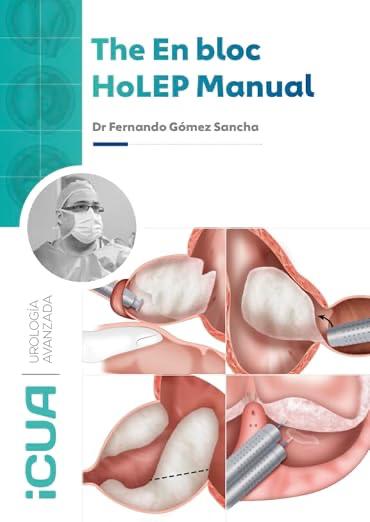
- HoLEP (holmium laser enucleation): removes the entire adenoma regardless of size, with a retreatment rate below 2%. Recommended by EAU and AUA guidelines for any prostate size.
- Open surgery: effective but invasive, with long hospital stay and prolonged recovery. Increasingly being replaced by HoLEP.
What if I do not have surgery? The risks of untreated BPH
Untreated BPH can lead to complications that go beyond mere urinary discomfort:
- Acute urinary retention: complete inability to urinate, requiring emergency catheterisation.
- Bladder damage: a bladder that has spent years working against obstruction loses its contractile ability. This damage may be irreversible.
- Recurrent urinary infections: residual urine left in the bladder is a breeding ground for bacteria.
- Bladder stones: form in stagnant urine.
- Bladder diverticula: the bladder wall herniates, forming pouches.
- Kidney damage: in advanced cases, obstruction can affect the kidneys (hydronephrosis).
A recent study involving 50,000 subjects demonstrated that the bladder muscle deteriorates progressively as obstruction advances, and that there is a window of opportunity to treat the patient before that deterioration becomes permanent. I do not say this to cause alarm, but to help you understand that postponing urological assessment indefinitely is not a wise strategy.
At ICUA we provide a complete assessment in a single visit. If treatment is needed, we will explain all the options.
📞 +34 91 435 28 44 · ✉ icua@icua.es
Scientific references
- Sandhu JS, Bixler BR, Dahm P, et al. Management of lower urinary tract symptoms attributed to BPH: AUA guideline amendment 2023. J Urol. 2024;211:11-19. DOI
- EAU Guidelines on Management of Non-neurogenic Male LUTS. 2025 Edition. EAU Guidelines
- Egan KB. The epidemiology of benign prostatic hyperplasia associated with lower urinary tract symptoms. Urol Clin North Am. 2016;43:289-297. DOI
- Iscaife A, Rodríguez Socarrás M, Talizin TB, et al. Contemporary results of En Bloc HoLEP for large prostates. World J Urol. 2025;43:401. PubMed
- Gauhar V, Gómez Sancha F, Enikeev D, et al. Results from a global multicenter registry of 6193 patients (REAP). World J Urol. 2023;41:3033-3040. PubMed


No comments:
Post a Comment